Online Business Models: A Practical Guide to Building Digital Income Skills
Online business models explain how a business provides value to customers and receives revenue in return. Some businesses sell physical products, others provide services, and some earn revenue through subscriptions, advertising, commissions, or digital products.
The internet has created more ways to present products, communicate with customers, and deliver services. However, starting an online business is not automatically easy or profitable. Each model requires different skills, resources, time, and planning.
Understanding these differences can help you make informed decisions before investing money or committing to a particular idea.
This guide explains common online business models, how they work, their advantages and limitations, and how to evaluate which model may suit your goals and available resources.
What Is an Online Business Model?
An online business model describes how a business creates value for customers, delivers its products or services, and generates revenue.
A business model should answer four important questions:
- What value does the business provide? What problem does it solve, or what need does it meet?
- Who are the customers? Who is likely to need or benefit from the product or service?
- How is the value delivered? Does the business use a website, online marketplace, digital platform, or another channel?
- How does the business generate revenue? Does it sell products, charge for services, receive commissions, or use another revenue method?
For example, a freelance designer might create logos for clients and charge a project fee. A digital publisher might produce educational resources and sell downloadable guides. An online shop might sell physical products and arrange delivery to customers.
These businesses operate differently, even though all use digital technology.
Choosing a model should begin with understanding the customer and the value being offered, rather than simply copying a popular online business.
Why Understanding Business Models Matters
Learning how online business models work can help you compare opportunities and avoid making decisions based only on advertising or promises of quick results.
Understand Where Revenue Comes From
A business needs a clear way to receive payment or generate revenue.
For example, a service provider may charge for each completed project, while a subscription business may charge customers regularly for continued access to a service.
Understanding the revenue model helps you identify what customers are paying for and what the business must deliver in return.
Recognize Costs and Responsibilities
Online businesses can have costs even when they operate without a physical shop.
These may include software, hosting, product materials, payment processing, marketing, customer support, delivery, and maintenance.
A business also needs to consider taxes, consumer protection requirements, privacy, and other obligations that apply to its location and activities.
Compare Different Ways of Working
Some business models require regular customer interaction. Others involve developing a product before selling it to multiple customers.
For example, freelance work usually involves delivering a service to a specific client. Selling a digital product may allow the same product to be delivered to multiple customers, but creating, promoting, updating, and supporting it still takes work.
Understanding these differences can help you choose a realistic starting point.
Seven Common Online Business Models
The following models are widely used in different forms of online business. Some businesses combine more than one model.
1. Freelancing and Digital Services
Freelancing involves providing a service to a client in exchange for payment. Digital services may include writing, website development, graphic design, video editing, research, translation, or technical support.
How it works
A service provider identifies a customer need, agrees on the work to be completed, delivers the service, and receives payment under the agreed terms.
For example, a web developer might build a small business website with a homepage, contact page, service descriptions, and mobile-friendly navigation.
The customer pays for the agreed work, and the developer is responsible for delivering a suitable result.
What you may need
- A relevant skill.
- Examples of your work.
- Clear communication.
- A way to agree on scope and payment.
- A reliable method of delivering the service.
- An understanding of client expectations.
Advantages
Freelancing can be started with relatively limited equipment when the service requires only a computer, internet access, and suitable software. It also allows a person to develop experience by working on defined projects.
Limitations
Income may vary according to demand, experience, pricing, and the availability of clients. Finding customers, managing revisions, meeting deadlines, and communicating professionally all require time.
Who might consider it?
Someone who enjoys solving specific problems and wants to develop a skill that can be demonstrated through practical projects.
2. Affiliate Marketing
Affiliate marketing involves promoting another business’s products or services through an arrangement that may provide a commission for qualifying purchases, leads, or other agreed actions.
How it works
An affiliate joins a program, receives tracking links or another approved referral method, creates relevant content, and directs interested people to the merchant.
If a visitor completes an eligible action under the program’s terms, the affiliate may receive a commission.
For example, an educational website could publish a detailed comparison of two website-building tools. If the publisher participates in an affiliate program, it may earn a commission when a reader purchases through a qualifying referral link.
What you may need
- Knowledge of a relevant topic.
- Helpful, accurate content.
- An understanding of the intended audience.
- A way to attract relevant visitors.
- Knowledge of the affiliate program’s terms.
- Clear disclosure of commercial relationships.
Advantages
The affiliate does not usually need to manufacture the product, manage its inventory, or handle its delivery.
Limitations
Commissions are not guaranteed. Results can depend on traffic, audience trust, product suitability, conversion rates, program terms, and changes made by merchants.
Who might consider it?
Someone who enjoys researching products or services and explaining their usefulness honestly.
Important: Affiliate relationships should be disclosed clearly. Recommendations should be based on the reader’s needs, not simply on the possibility of earning a commission.
3. E-Commerce and Online Stores
E-commerce involves selling products through digital channels. Products may be physical, digital, or a combination of both.
A business may sell through its own website, an online marketplace, or another suitable sales platform.
How it works
The seller selects products, presents accurate product information, sets prices, accepts orders, and arranges payment and delivery where applicable.
For example, an online stationery shop could sell notebooks, pens, and study planners. Its website might include product descriptions, prices, photographs, delivery information, and a customer support page.
What you may need
- Suitable products.
- Product descriptions and images you have permission to use.
- A sales channel.
- Pricing and cost calculations.
- Payment arrangements.
- Order management.
- Delivery and return procedures, where applicable.
- Customer service.
Advantages
An online store can make product information available to customers beyond a physical shop’s immediate location, depending on the seller’s delivery arrangements and target market.
Limitations
Businesses may face inventory costs, delivery problems, returns, payment fees, competition, and the cost of attracting customers. A website alone does not guarantee sales.
Who might consider it?
Someone who understands a specific customer need and can manage the practical responsibilities of selling products.
4. Print-on-Demand
Print-on-demand is a business model in which products are produced after an order is placed, using a production or fulfillment provider.
Products may include printed shirts, posters, mugs, notebooks, or other customizable items.
How it works
A seller develops an original design, selects a suitable product and provider, prepares the listing, and promotes the product. When an order is placed, the provider produces and ships it according to the agreed arrangement.
For example, a designer could create an original illustration for a notebook cover and offer the notebook through an online store.
What you may need
- Original or properly licensed designs.
- A reliable production provider.
- Product samples or other quality checks where possible.
- Pricing that accounts for costs and fees.
- Product listings.
- Customer support.
- A way to attract relevant buyers.
Advantages
The seller may not need to purchase large quantities of inventory in advance because products are produced after orders are received.
Limitations
Production costs can reduce margins. Quality, shipping times, refunds, customer service, and competition still matter. The seller may also need to pay for design software, store fees, or marketing.
Who might consider it?
Someone interested in design, product presentation, and e-commerce who is willing to test ideas carefully.
Always respect copyright and trademark rights. Do not assume that an image, character, logo, or popular phrase is available for commercial use.
5. Selling Digital Products
Digital products are items delivered electronically rather than as physical goods.
Examples include original templates, downloadable planners, educational guides, design assets, spreadsheets, and certain types of software.
How it works
A creator identifies a need, develops a digital resource, checks that it works as intended, and sells access or a downloadable copy under clear terms.
For example, someone who understands project organization could create an original project-planning spreadsheet with instructions and examples.
The spreadsheet might help users organize tasks, deadlines, and responsibilities.
What you may need
- Knowledge of the problem being addressed.
- A useful digital product.
- Quality checks and instructions.
- A suitable sales and delivery method.
- Customer support.
- Clear terms of use.
- A way to reach potential customers.
Advantages
A completed digital product can often be delivered electronically to multiple customers without producing and shipping a separate physical item each time.
Limitations
Creating a useful product can require substantial work. The creator may need to update it, answer customer questions, correct errors, and compete with similar products.
Digital products are not automatically passive income. Marketing, maintenance, and customer support may continue after the product is released.
Who might consider it?
Someone who can create a resource that solves a specific problem and can explain how customers should use it.
6. Subscription-Based Businesses
A subscription model charges customers on a recurring basis for continued access to a product, service, or collection of resources.
Examples include software subscriptions, membership communities, specialist newsletters, and online learning services.
How it works
The business offers continuing value and charges according to a defined billing schedule.
For example, a software company might provide a project-management application with features that help teams organize tasks and collaborate.
Customers pay according to the subscription terms for access to the service.
What you may need
- A product or service that provides ongoing value.
- A clear pricing structure.
- A reliable way to manage access and payments.
- Customer support.
- Regular maintenance or updates.
- Clear cancellation and renewal terms.
Advantages
Recurring billing can make revenue more predictable when customers remain subscribed.
Limitations
Customers may cancel if the service no longer meets their needs. The business must continue maintaining the product, protecting customer information, resolving problems, and delivering the value promised.
Who might consider it?
Someone who can maintain a useful service or resource over time rather than simply create a one-time product.
7. Content Creation and Digital Publishing
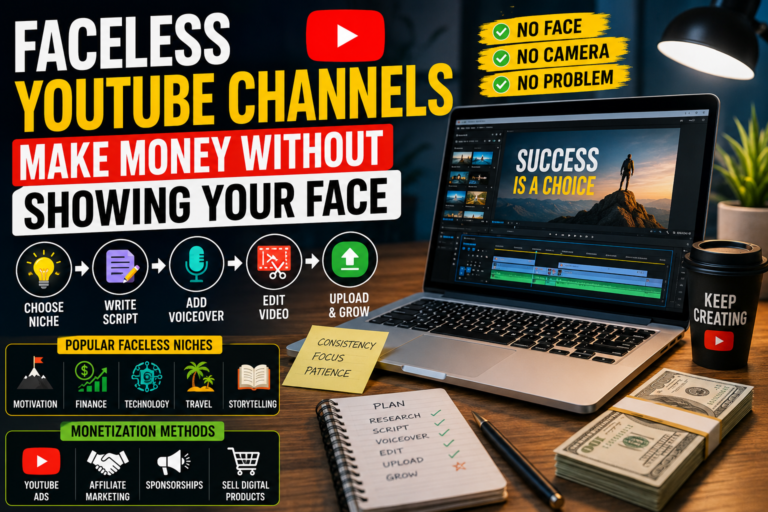
Digital publishing involves producing useful or entertaining material for an audience. Examples include educational websites, newsletters, videos, podcasts, and specialist publications.
A publisher may generate revenue through advertising, sponsorships, subscriptions, product sales, or affiliate relationships, depending on the platform and business arrangement.
How it works
The creator selects a subject, researches the intended audience’s needs, produces original material, publishes it, and works to reach relevant readers or viewers.
For example, an educational website could publish tutorials that help beginners understand spreadsheets, website development, or digital marketing.
The publisher could then explore suitable ways to support the website financially without compromising the usefulness or trustworthiness of the content.
What you may need
- Knowledge of a subject.
- Research and communication skills.
- A consistent publishing process.
- Original content.
- An understanding of copyright.
- A way to reach the intended audience.
- Patience to improve content based on evidence.
Advantages
Publishing can help a creator build a body of work, explain ideas, and develop an audience around a defined subject.
Limitations
Audience growth can take time, and revenue may be unpredictable. Publishing also requires research, editing, updates, and technical maintenance.
Who might consider it?
Someone who enjoys explaining ideas, producing original material, or helping an audience understand a particular subject.
How to Compare Online Business Models
The seven models differ in how they create value, how quickly they can be tested, and what responsibilities they involve.
| Business model | Main value provided | Typical cost considerations | Important skills |
|---|---|---|---|
| Freelancing | A service delivered to a client | Equipment, software, training, and time | Communication and service delivery |
| Affiliate marketing | Helpful recommendations that connect buyers with merchants | Content production, hosting, and audience development | Research, writing, and audience understanding |
| E-commerce | Physical or digital products | Product costs, fees, delivery, and returns | Product selection, pricing, and customer service |
| Print-on-demand | Customized products produced after orders | Production costs, store fees, design, and marketing | Design, product presentation, and pricing |
| Digital products | Downloadable resources or digital tools | Development, software, sales platform, and support | Subject knowledge and product creation |
| Subscriptions | Continuing access to a product or service | Development, hosting, maintenance, and support | Service management and customer retention |
| Digital publishing | Information, education, or entertainment | Research, hosting, production, and audience development | Research, writing, editing, and communication |
These are general comparisons, not fixed cost estimates. Actual expenses depend on the business, location, tools, pricing, and how the work is carried out.
A model with low starting costs is not necessarily easy to operate. A model with higher initial costs is not automatically more profitable.
How to Choose an Online Business Model
Choosing a business model should begin with a clear understanding of your abilities, resources, and intended customers.
Step 1: Identify a Specific Problem
Start by identifying a problem that people experience or a task they need to complete.
Examples include organizing business records, creating a clear website, finding suitable educational resources, or presenting product information accurately.
Avoid starting with the assumption that a popular business idea must be suitable for you.
Step 2: Identify the Intended Customer
Think about who experiences the problem.
A spreadsheet designed for students may need different features from one intended for a small business. A website for a restaurant has different requirements from a website for a software company.
Understanding the audience helps you decide what to create and how to present it.
Step 3: Assess Your Skills
List the skills you already have and the skills you need to develop.
If you are comfortable with writing, research, or design, you might explore a project that uses those abilities. If you prefer technical problem-solving, you might investigate a small website or software project.
You do not need to master everything before beginning. Choose a project that is appropriate for your current level and learn the missing skills as you progress.
Step 4: Calculate the Likely Costs
Identify the expenses required to test and operate the idea.
Depending on the model, these could include software, hosting, training, materials, production, payment processing, delivery, or customer support.
Separate essential expenses from optional purchases. Where possible, test the idea using existing resources before committing money to tools or services you may not need.
Step 5: Test the Idea on a Small Scale
Before investing heavily, look for evidence that the proposed product or service addresses a real need.
You could create a sample, ask potential users for feedback, demonstrate a prototype, or publish a small collection of original resources.
Feedback does not guarantee demand, but it can help you identify weaknesses before making a larger commitment.
Step 6: Review the Results
Compare what you expected with what actually happened.
Consider whether people understood the offer, whether the product worked as intended, what it cost to deliver, and what you learned from the process.
Use the findings to improve the idea, test a different approach, or decide that another model would be more appropriate.
A Practical Example: Comparing Two Business Ideas
Imagine a learner with basic graphic design skills who wants to explore an online business.
They are considering two ideas:
Option A: Provide a design service
The learner could create original social media graphics for a small business. This would require developing design skills, understanding the client’s needs, agreeing on the scope of work, and delivering the files.
The project could be tested by creating a sample design for a fictional business and asking for feedback.
Option B: Sell downloadable design templates
The learner could create a small collection of original templates and offer them as a digital product. This would require designing the templates, writing instructions, checking usability, and setting up an appropriate sales and delivery process.
The project could be tested by asking potential users whether the templates solve a real problem.
The two ideas use related skills, but their requirements differ.
The service model involves completing work for individual clients. The digital product model involves creating a resource that can be sold to multiple customers, while still requiring promotion, updates, and support.
Neither option is automatically better. The learner should compare the work involved, the intended customers, available resources, and feedback from practical testing.
Understanding Revenue, Costs, and Profit
Revenue, costs, and profit are different concepts.
- Revenue is the money a business receives from its sales or services.
- Costs are the expenses involved in operating the business.
- Profit is what remains after the relevant costs are deducted from revenue.
For a simple example, suppose a seller receives 100 units of currency from a sale and spends 60 units on the product and other directly related costs.
The remaining 40 units are the amount left after those particular costs. They are not necessarily the business’s final profit because other expenses, taxes, and obligations may still need to be considered.
This distinction matters because sales alone do not reveal whether a business is financially sustainable.
Before choosing a model, consider how prices are set, which costs change with each sale, and which costs continue even when sales are low.
Common Mistakes to Avoid
Expecting Immediate Income
A business may take time to develop a useful offer, reach customers, and establish reliable processes.
Do not assume that creating a website, publishing a product, or joining an affiliate program will automatically generate revenue.
Choosing a Model Only Because It Is Popular
A popular model may require skills, resources, or ongoing responsibilities that do not suit your circumstances.
Choose based on customer needs, practical requirements, and your willingness to do the work involved.
Ignoring Costs
Some beginners focus only on the selling price and overlook production costs, software fees, refunds, payment processing, or customer support.
List the expected costs before deciding whether an idea is realistic.
Copying Other People’s Work
Copying another creator’s articles, images, designs, software, or products can create legal and ethical problems.
Study existing work to understand the market, but develop your own material or use resources you have permission to use.
Treating Every Online Opportunity as Legitimate
Some promotions make exaggerated claims or hide important conditions.
Research the organization, check the terms, understand all fees, and be cautious of pressure to pay immediately or promises of guaranteed results.
Neglecting Customers
A business must deliver what it promises. Accurate product information, clear communication, fair terms, and appropriate support help customers make informed decisions.
A business model should be evaluated by the value it delivers, not only by the method it uses to collect payment.
A Four-Week Plan for Exploring a Business Model
You can use the following plan to investigate an idea without assuming that you must immediately launch a business.
Week 1: Choose a Problem and Audience
Identify a specific problem and the people who experience it. Research existing solutions and note what customers may still need.
Outcome: A clear description of the problem and intended audience.
Week 2: Compare Suitable Models
Choose two possible models and compare their costs, skills, delivery requirements, and risks.
Outcome: A simple comparison showing the advantages and limitations of each option.
Week 3: Create a Small Demonstration
Build a sample, prototype, service example, or original resource that illustrates your idea.
Avoid spending heavily before you have tested the basic concept.
Outcome: A practical example that can be reviewed.
Week 4: Collect Feedback and Review
Ask suitable people for feedback where appropriate. Review the quality of the work, the costs involved, and what you learned about the intended audience.
Outcome: A decision about what to improve, test next, or reconsider.
This plan is designed to support learning and informed decision-making. It does not guarantee that the idea will attract customers or generate income.
Frequently Asked Questions
What is the best online business model for beginners?
There is no single best model for everyone. The right choice depends on your skills, resources, intended customers, and the type of work you want to do. Comparing the requirements and testing a small idea can help you make an informed decision.
Can an online business operate without a website?
Yes. Some businesses use online marketplaces, social platforms, or other established services to present products and communicate with customers. The suitability of each channel depends on the business and the platform’s terms.
Is digital product sales passive income?
Not necessarily. A digital product may be delivered automatically, but creating it, improving it, attracting customers, handling support, and maintaining sales channels still require work.
What is the difference between revenue and profit?
Revenue is the money received from sales or services. Profit is what remains after relevant costs are deducted. A business can have revenue while still making a loss if its costs are higher.
Do I need a large budget to explore an online business idea?
Not always. Some ideas can be tested with existing equipment and free or low-cost tools. However, the actual requirements depend on the model. Calculate likely costs and avoid committing money you cannot afford to lose.
How can I evaluate an online business opportunity?
Understand the product or service, intended customers, costs, revenue method, risks, and obligations. Check claims independently, read the terms, and be cautious of guaranteed-income promises or pressure to make quick payments.
Final Thoughts
Online business models offer different ways to provide value through products, services, content, and digital resources. Each model has its own requirements, costs, and challenges.
Before choosing one, identify a real problem, understand the intended customer, assess your skills, and compare the work involved. Start with a manageable project, collect evidence, and use what you learn to improve your decisions.
A sustainable business depends on more than selecting a popular model. It requires delivering something useful, managing costs, communicating honestly, and adapting to what customers actually need.