AI Side Hustles: Practical Ways to Use Artificial Intelligence to Build Skills and Services
Artificial intelligence is becoming part of many everyday digital tasks, including writing, research, design, programming, marketing, data organization, and customer communication. For someone learning digital skills, AI can be useful as a productivity and learning tool.
However, there is an important distinction between using an AI tool and providing something valuable with it.
Having access to an AI application does not automatically create a business, professional skill, or source of income. A useful service still requires knowledge, judgment, communication, quality control, and an understanding of the problem being solved.
This is why a practical AI side hustle should begin with a skill or problem, not simply with the desire to make money from AI.
This guide explains practical ways AI can support digital services, the skills behind those services, how beginners can develop their abilities, and the limitations they should consider before offering AI-assisted work.
What Is an AI Side Hustle?
An AI side hustle is a small business activity, freelance service, or personal project that uses artificial intelligence as part of its workflow.
AI may help with one stage of the process or several stages. For example, a writer might use an AI assistant to brainstorm ideas before researching and writing an article. A developer might use AI to understand an unfamiliar programming concept before testing a solution. A designer might use AI to explore concepts before creating a final design.
In each example, AI is a supporting tool rather than the entire service.
The person providing the service remains responsible for reviewing the work, correcting mistakes, protecting confidential information, and making sure the final result is appropriate for its intended purpose.
AI Is a Tool, Not a Business Model
One of the easiest mistakes to make is to start with a tool instead of a problem.
For example, saying:
“I want to make money with AI.”
does not explain what service will be provided or who needs it.
A more useful question is:
“What problem can I solve, and where can AI help me solve it more efficiently?”
That change in thinking creates a better foundation.
A small business might need help organizing information. A website owner might need help improving existing content. A creator might need assistance planning content. A developer might need help testing a software project.
In each situation, the customer problem comes first. AI is one possible technology that can support the solution.
Practical AI-Assisted Services
There are many ways to combine AI with existing digital skills. The following examples should be viewed as areas for learning and experimentation rather than guaranteed income opportunities.
1. AI-Assisted Content Writing
Businesses, websites, organizations, and creators often need written material such as articles, product descriptions, newsletters, documentation, and social media content.
AI can help a writer brainstorm ideas, organize an outline, identify questions readers may have, and improve a first draft.
The human writer still needs to:
- Research the subject
- Check important facts
- Understand the intended audience
- Edit the writing
- Remove unsupported claims
- Improve clarity
- Add useful examples
- Review the final version
The valuable skill is therefore not simply generating text. It is communicating useful information clearly to a specific audience.
A beginner interested in this area can start by practising research, writing, editing, and fact-checking before offering a service.
2. AI-Assisted Blogging
AI can support different stages of the blogging process.
A practical workflow might look like this:
Topic selection → research → outline → writing → AI-assisted editing → fact-checking → human review → publication
AI can help organize ideas, but a useful blog needs more than quickly generated articles.
A blogger can add value through:
- Personal experience
- Original examples
- Practical demonstrations
- Comparisons
- Screenshots
- Research
- Step-by-step explanations
- Lessons learned from testing
Publishing many similar articles is not necessarily better than publishing fewer useful articles.
The goal should be to create resources that answer genuine questions and give readers a reason to return.
3. AI-Assisted Social Media Services
Social media management involves more than generating captions.
AI can help with:
- Content ideas
- Draft captions
- Content calendars
- Post variations
- Content repurposing
- Campaign brainstorming
- Basic organization of performance information
The person managing the account still needs to understand the business, audience, products, communication style, and goals.
For example, a restaurant, software company, school, and clothing business will not necessarily need the same type of social media content.
A useful service therefore combines social media knowledge with AI-assisted productivity.
4. AI-Assisted Graphic Design
AI-powered design tools can help with concept development, image variations, background removal, layouts, and other creative tasks.
However, good design still requires human judgment.
Important considerations include:
- Layout
- Typography
- Branding
- Accessibility
- Consistency
- Intended audience
- Image licensing
- Commercial usage requirements
A person interested in this area should learn basic design principles instead of depending entirely on automatically generated images.
AI can speed up parts of the process, but the final design should still serve a clear purpose.
5. AI-Assisted Video Production
AI can support several parts of video production, including:
- Script planning
- Transcription
- Caption creation
- Audio cleanup
- Content organization
- Editing assistance
- Idea development
For example, a creator could use AI to organize the structure of a tutorial and then add their own explanation, demonstrations, examples, and editing.
The final video should be reviewed for accuracy, clarity, relevance, and quality.
Using AI to produce content faster does not automatically make the content useful. The viewer still needs a reason to watch it.
6. AI-Assisted Virtual Assistance
Virtual assistants perform organizational and administrative tasks for individuals and businesses.
AI can support activities such as:
- Drafting routine messages
- Organizing information
- Preparing documents
- Creating task lists
- Summarizing supplied information
- Organizing meeting notes
- Preparing research outlines
Privacy is particularly important in this type of work.
Client information should not automatically be entered into an AI service. Before using AI with client data, the service provider should understand the relevant privacy requirements and the tool’s data-handling practices.
The ability to organize information accurately and communicate professionally remains more important than simply knowing how to use an AI application.
7. AI-Assisted Research
Research involves finding, organizing, comparing, and evaluating information.
AI can help generate research questions, organize notes, suggest categories, and summarize information supplied to it.
However, AI output should not automatically be treated as factual.
A responsible research workflow is:
- Define the research question.
- Find appropriate sources.
- Organize the information.
- Use AI where it genuinely helps.
- Verify important claims.
- Separate evidence from assumptions.
- Prepare the final explanation.
Extra care is necessary for subjects where inaccurate information could have serious consequences.
Research skill and source evaluation are therefore important parts of an AI-assisted research service.
8. AI-Assisted Email Marketing
Businesses use email for newsletters, announcements, customer communication, onboarding, and marketing.
AI can help brainstorm subject lines, organize campaign ideas, refine drafts, and create variations for different audiences.
However, effective email communication still requires strategy.
A useful campaign should have:
- A clear purpose
- A defined audience
- Accurate information
- Useful content
- Appropriate frequency
- A clear next step for the reader
AI can help with production, but it cannot replace an understanding of the people receiving the communication.
9. AI-Assisted Presentation Development
Presentations are used by businesses, educators, consultants, students, and organizations.
AI can assist with:
- Organizing information
- Creating an outline
- Structuring slides
- Drafting short explanations
- Developing visual concepts
- Editing text
The final presentation should be reviewed carefully.
A presentation filled with automatically generated text may be less effective than a shorter presentation built around a clear message.
The useful skill is the ability to turn information into a structure that an audience can understand.
10. AI-Assisted Website Services
People with website development or website management skills can use AI to support parts of their workflow.
For example, AI may help with:
- Explaining programming concepts
- Creating an initial code draft
- Generating test ideas
- Identifying possible bugs
- Writing documentation
- Brainstorming interface ideas
- Organizing technical tasks
AI-generated code should be reviewed and tested before being used in a real project.
Website development also requires attention to security, accessibility, performance, privacy, maintainability, and user experience.
This is a good example of how AI can support an existing technical skill rather than replace it.
11. AI Workflow Automation
Many businesses have repetitive processes involving forms, spreadsheets, email, customer enquiries, and internal documents.
Automation can reduce some repetitive work, but it should begin with understanding the existing process.
A practical workflow is:
- Understand the current process.
- Identify repetitive tasks.
- Decide which tasks are suitable for automation.
- Select appropriate tools.
- Build a small test workflow.
- Check the results.
- Document the process.
- Monitor the workflow after implementation.
Automation is most useful when it solves a genuine operational problem.
Using automation simply because a technology is popular may create unnecessary complexity.
12. AI-Assisted Customer Support
Businesses can use AI to support simple customer-service tasks such as frequently asked questions, document searches, and draft responses.
However, not every customer question should be handled automatically.
Complex, sensitive, unusual, or unresolved issues may require human assistance.
A responsible system should therefore have clear boundaries and a process for transferring appropriate conversations to a person.
Customer support is ultimately about solving customer problems, not simply reducing the number of human interactions.
13. AI-Assisted Translation and Language Work
AI translation tools can help with preliminary translations and multilingual workflows.
However, translation quality can vary depending on the language, subject, terminology, and context.
Human review is especially important for technical, legal, medical, educational, or culturally sensitive material.
Anyone offering language services should accurately represent their language abilities and review AI-assisted translations before delivering them.
14. AI-Assisted Digital Products
AI can support the development of digital products such as:
- Templates
- Checklists
- Worksheets
- Planning documents
- Presentation resources
- Learning materials
- Design resources
- Software utilities
The important question is not how much material can be generated.
The important question is:
Does the product solve a real problem for a specific group of people?
A long AI-generated document is not automatically a valuable product.
A useful digital product usually requires planning, editing, testing, organization, and an understanding of the intended user.
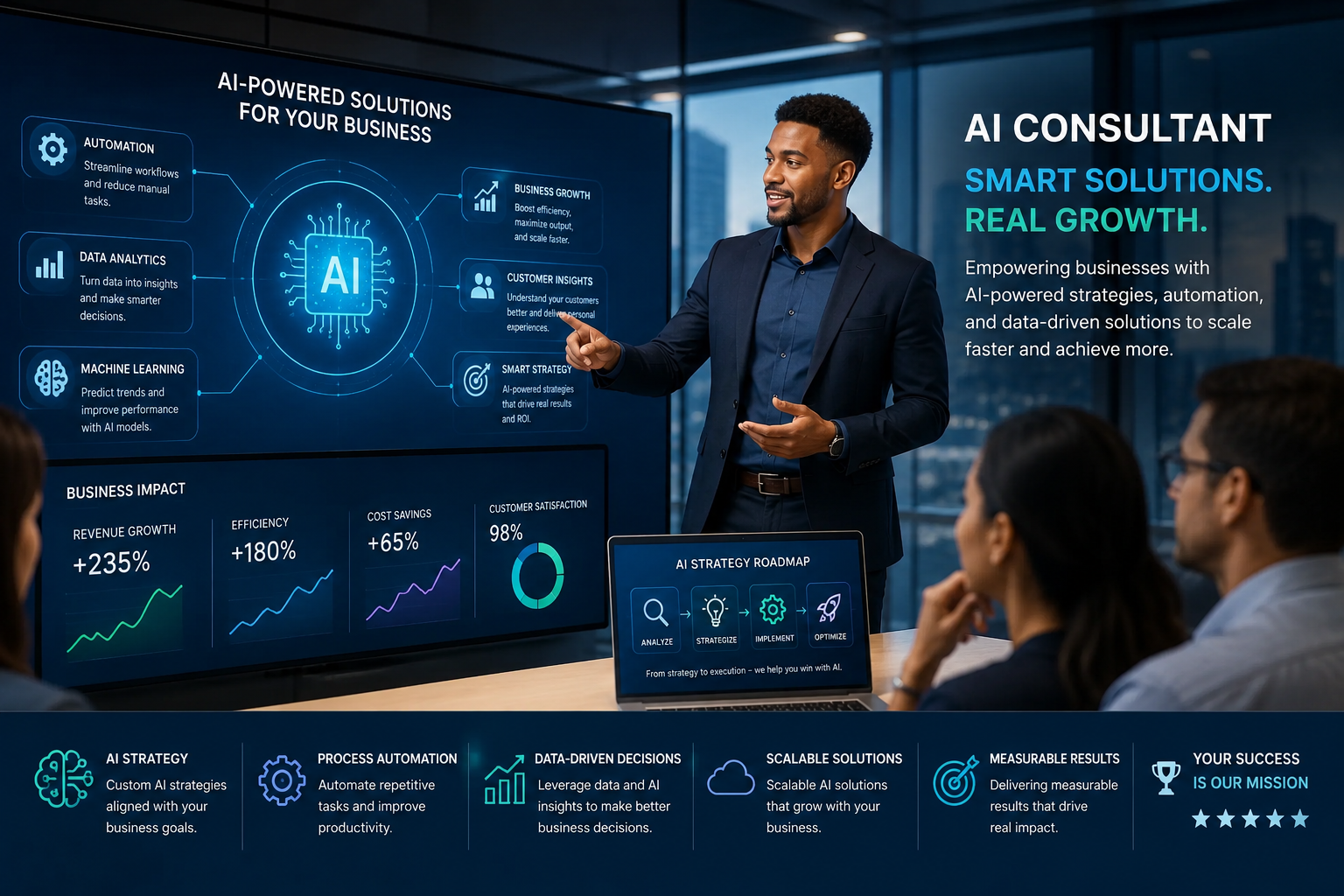
15. AI Training and Consulting
AI training and consulting require more knowledge than simply recommending an AI application.
Someone providing this type of service needs to understand the client’s workflow and identify appropriate uses of AI.
Questions may include:
- Which tasks could benefit from AI?
- Which tasks should remain human-led?
- What information should not be entered into an AI system?
- How should employees review AI-generated results?
- Which existing tools can work with AI?
- How should the results of an AI project be evaluated?
This is generally more appropriate for someone who has already developed relevant technology, business, communication, or training experience.
It should not be presented as an effortless beginner opportunity.
The Skills Behind Valuable AI Services
One of the most important lessons is that AI becomes more useful when combined with another skill.
Writing + AI
This combination can support:
- Content development
- Editing
- Documentation
- Research organization
- Business communication
Design + AI
Design knowledge can help with:
- Brand materials
- Presentations
- Marketing graphics
- Visual concepts
Programming + AI
Programming knowledge can help with:
- Software development
- Testing
- Documentation
- Automation
- Debugging
Marketing + AI
Marketing knowledge can support:
- Audience research
- Content planning
- Campaign development
- Performance analysis
Research + AI
Research skills can help with:
- Information organization
- Research planning
- Comparing sources
- Summarizing verified information
The underlying principle is simple:
AI is a tool. A useful skill combined with AI can become part of a useful service.
How Beginners Can Start
A beginner does not need to learn every AI application available.
A focused approach is usually easier.
Step 1: Choose One Skill
Choose one area that you genuinely want to learn.
Examples include:
- Writing
- Graphic design
- Video editing
- Web development
- Research
- Digital marketing
- Administration
Step 2: Identify a Problem
Think about problems that individuals, creators, organizations, or businesses experience.
Ask:
What useful result could I help someone achieve?
This question moves the focus away from tools and toward value.
Step 3: Learn One Appropriate AI Tool
Choose a tool that supports your selected skill.
Learn:
- What it does
- What it cannot do
- Where it produces unreliable results
- How to review its output
- What information should not be entered into it
There is no need to subscribe to many AI tools simply because they are available.
Step 4: Practise
Create several small projects.
For example, someone learning AI-assisted content writing could create sample articles for imaginary businesses. Someone learning design could create sample social media graphics. A beginner developer could build a small practice application.
Practice projects should be clearly presented as practice work.
Do not claim client experience that you do not have.
Step 5: Review Your Work
Before considering a project complete, check:
- Accuracy
- Quality
- Originality
- Clarity
- Formatting
- Usability
- Relevance
The review stage is one of the areas where human judgment remains important.
Step 6: Build a Small Portfolio
A portfolio should demonstrate what you can actually do.
For each project, explain:
- The problem
- Your approach
- The tools used
- Your contribution
- The final result
This gives potential clients or collaborators something concrete to evaluate.
Step 7: Ask for Feedback
Ask trusted people to review your work.
Useful feedback can reveal problems with clarity, design, organization, or usefulness that you may not notice yourself.
Step 8: Define the Service Clearly
Instead of saying:
“I provide AI services.”
explain:
- What you provide
- Who it is for
- What problem it addresses
- What the customer receives
A clear service description is more useful than simply mentioning the technology behind the service.
How to Evaluate an AI Side Hustle
Before spending significant time or money on an idea, ask the following questions.
Does It Solve a Real Problem?
If nobody has a meaningful reason to use the service, the idea may be difficult to develop.
Do I Have the Required Skills?
AI can assist with tasks, but it does not automatically provide professional expertise.
If a service requires writing, design, programming, research, or marketing knowledge, develop that knowledge alongside your use of AI.
Can I Demonstrate the Quality?
A sample project or portfolio can demonstrate what you are capable of producing.
Is There Genuine Demand?
Do not assume that every AI trend represents a sustainable opportunity.
Research the intended audience and understand what they actually need.
Can I Provide Human Oversight?
If accuracy, communication, or important decisions are involved, make sure there is an appropriate human review process.
What Are the Costs?
Consider:
- Software
- Internet access
- Hosting
- Equipment
- Transaction fees
- Marketing
- Taxes
- Your time
A service can appear profitable until its real costs are considered.
What Are the Risks?
Consider issues such as:
- Copyright
- Privacy
- Security
- Incorrect information
- Licensing
- Client responsibilities
Understanding these issues before starting can help you make better decisions.
Common AI Side Hustle Mistakes
Treating AI Output as Automatically Correct
AI systems can produce inaccurate, incomplete, or misleading information.
Review important outputs before using or publishing them.
Publishing Large Amounts of Generic Content
Producing more content does not automatically make a website more useful.
Focus on answering real questions and providing information that has a clear purpose.
Copying or Lightly Rewriting Other People’s Content
Researching information is different from copying it.
Use research as a foundation for your own explanation, examples, analysis, and practical guidance.
Promising Guaranteed Income
No AI tool guarantees business success.
Results can depend on skills, demand, competition, costs, consistency, communication, and customer relationships.
Avoid presenting hypothetical earnings as guaranteed results.
Buying Too Many Tools
Beginners do not need every AI application available.
Start with tools that directly support the skill or problem you are working on.
Ignoring Copyright and Licensing
AI does not remove intellectual property responsibilities.
Check the relevant licensing conditions for images, music, fonts, templates, software, and other materials before using them commercially.
Ignoring Privacy
Avoid entering passwords, confidential documents, private customer information, financial information, or other sensitive information into an AI system without understanding the applicable privacy requirements and risks.
AI Does Not Guarantee Income
An AI application does not guarantee that someone will earn money.
Many people can access the same tools. What can make a service useful is the ability to understand a problem and provide a reliable solution.
Important factors can include:
- Knowledge
- Experience
- Communication
- Quality
- Reliability
- Problem-solving
- Customer service
- Industry understanding
- Originality
- Consistency
For this reason, beginners should focus on developing useful skills and solving real problems rather than searching for an effortless income method.
A Simple 30-Day Learning Plan
A structured learning period can help beginners stay focused.
Week 1: Learn
Choose one skill and learn its fundamentals.
Avoid trying to learn every AI application at the same time.
Week 2: Practise
Create several small projects.
Use AI where it helps, but review the results yourself.
Week 3: Build
Choose one project and improve it.
Document:
- What you created
- The problem you were addressing
- Which tools you used
- What you learned
- What you would improve
Week 4: Review
Ask for feedback.
Identify weaknesses and decide whether the skill is worth developing further.
This approach creates a learning process rather than an expectation of immediate business results.
How to Add Human Value to AI-Assisted Work
The strongest AI-assisted workflows usually include human knowledge and judgment.
For example:
Research + AI + personal analysis
can be more useful than simply publishing an AI-generated summary.
Web development + AI + testing
is more reliable than publishing untested generated code.
Design knowledge + AI + brand guidelines
is more useful than producing random images.
Marketing knowledge + AI + audience research
is more useful than automatically producing large numbers of captions.
The objective should always be to improve the final outcome for the customer or reader.
Frequently Asked Questions
Can beginners use AI while developing a side business?
Yes. Beginners can use AI as part of learning, research, writing, design, programming, administration, marketing, and other activities.
However, using an AI tool does not guarantee customers or income.
Do I need programming skills?
No.
Many AI applications can be used without programming knowledge.
Programming becomes more relevant for software development, advanced automation, integrations, and technical projects.
Is AI-generated content automatically ready for publication?
No.
AI-assisted material should be reviewed for accuracy, originality, usefulness, clarity, and suitability for the intended audience.
Can AI replace professional skills?
AI can assist with or automate some tasks, but many services still require judgment, context, communication, accountability, and subject knowledge.
Should I use several AI tools?
Not necessarily.
A beginner can start with one appropriate tool and learn how to use it effectively before adding additional software.
Can an AI side hustle become a larger business?
It can, but there is no guarantee.
Business results depend on factors such as demand, skills, quality, competition, costs, customer relationships, and consistency.
Final Thoughts
Artificial intelligence is creating new ways for people to learn, create, organize information, and complete digital tasks.
However, the most useful opportunities are not necessarily the ones promising the fastest income.
A more practical approach is to identify a real problem, develop a useful skill, learn where AI can improve your workflow, and remain responsible for the quality of the final result.
Whether you choose writing, design, web development, marketing, research, administration, automation, or another area, focus on producing something genuinely useful.
AI can help you work more efficiently and explore ideas, but it can also make mistakes and produce material that requires careful review.
Start with one skill.
Solve one type of problem.
Build practical experience.
Review your work carefully.
Continue learning as the technology changes.
The goal should not be to find a shortcut to guaranteed income. The goal should be to develop useful skills and create services that provide genuine value over time.