Introduction
Building passive income streams from scratch was more than a financial choice for me—it was a complete lifestyle transformation. Like many, I once thought financial stability meant sticking to a traditional 9-to-5 job. But I soon understood that depending on a single paycheck made me vulnerable to economic changes, company layoffs, or personal emergencies. The concept of earning money while I slept, traveled, or pursued creative passions captivated me. Passive income became a symbol of freedom, security, and the power to shape my life on my own terms.
At the beginning, I had no roadmap. I didn’t inherit wealth, nor did I have insider connections. What I did have was curiosity, determination, and a willingness to experiment. I consumed books, podcasts, and online courses about financial independence and wealth creation. The more I learned, the clearer it became that building multiple streams of income was not only possible but essential in today’s unpredictable economy.
The journey was far from easy. I faced setbacks, wasted money on ideas that didn’t work, and struggled with self‑doubt. But each failure taught me valuable lessons. Over time, I discovered strategies that consistently generated income with minimal ongoing effort. These strategies ranged from digital ventures to traditional investments, each contributing to a diversified portfolio of earnings.
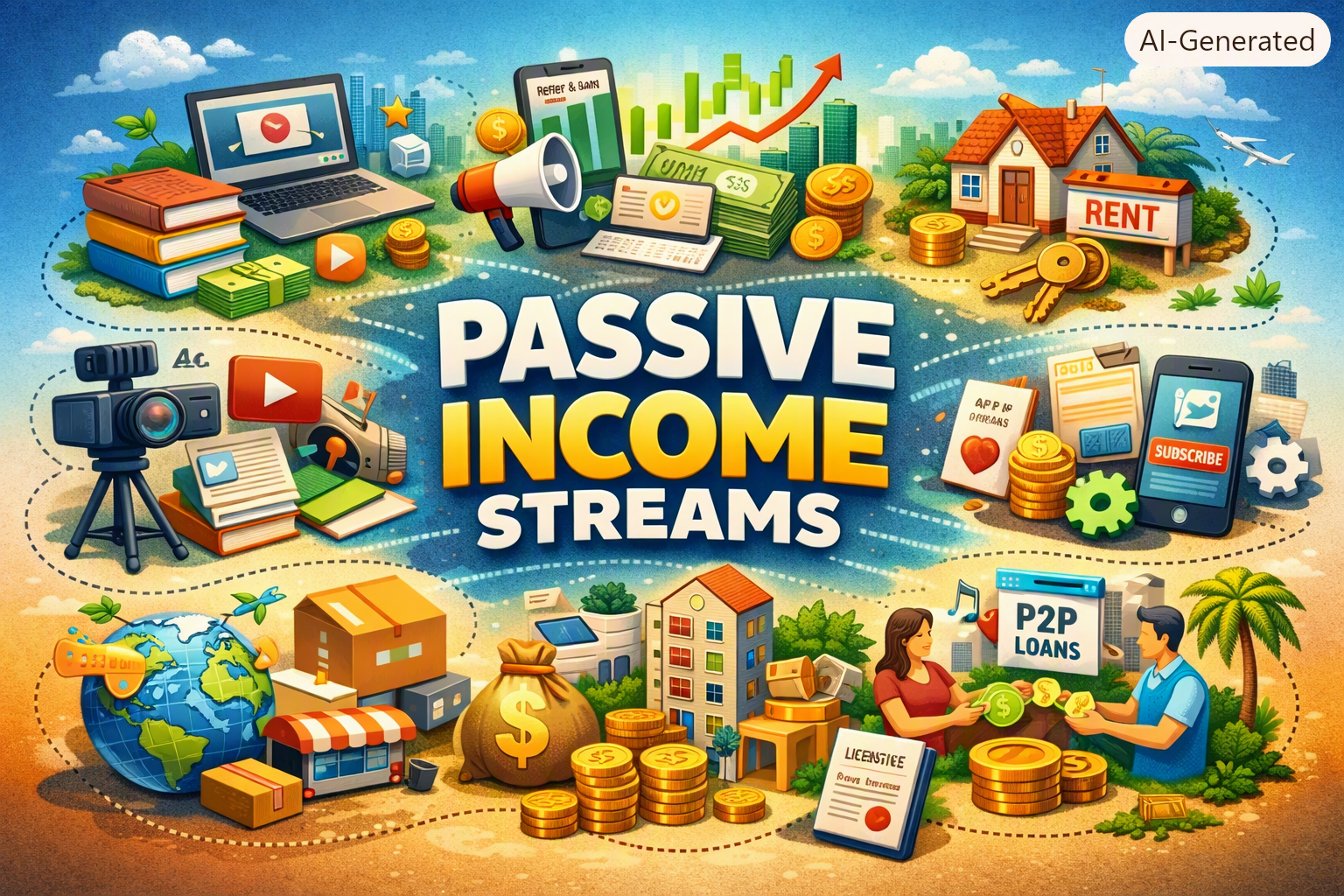
In this essay, I will reveal 10 essential strategies that helped me create multiple passive income streams from the ground up. Each approach is practical, scalable, and based on real-world experience. I’ll also point out common pitfalls beginners often face and end with valuable lessons to steer anyone toward financial freedom. Whether you’re a student, professional, or entrepreneur, these insights will empower you to start small, grow consistently, and ultimately achieve the independence you seek.
10 Key Strategies
1. Leveraging Digital Products
One of the first passive income streams I built was through digital products. Unlike physical goods, digital products require no inventory, shipping, or storage. Once created, they can be sold repeatedly with little additional effort. I started with eBooks and online courses, sharing knowledge I had gained in my career. Platforms like Amazon Kindle Direct Publishing and Udemy made it easy to reach global audiences.
The beauty of digital products lies in scalability. A single course can be sold to thousands of students without extra work. I automated the sales process using email marketing funnels and social media campaigns. Over time, these products became evergreen assets, generating income long after the initial effort.
The key to success was identifying topics people were willing to pay for. I researched trending niches, analyzed competitors, and listened to audience feedback. By continuously improving my content and updating materials, I ensured relevance and long‑term profitability.
2. Affiliate Marketing
Affiliate marketing became another cornerstone of my passive income journey. By promoting products or services through blogs, YouTube, or social media, I earned commissions whenever someone made a purchase using my referral link. The model is simple yet powerful: connect buyers with solutions they need, and get rewarded for the introduction.
I focused on building trust with my audience. Instead of promoting random products, I recommended tools and services I personally used. This authenticity increased conversions and built long‑term credibility. I also diversified across niches—technology, personal finance, and lifestyle—so I wasn’t dependent on one market.
SEO played a huge role. By writing keyword‑optimized articles and creating evergreen content, I attracted organic traffic that continued to generate affiliate sales months or years later. With automation tools, I tracked performance and scaled campaigns efficiently.
3. Dividend Investing
Investing in dividend‑paying stocks was my entry into traditional passive income. Unlike speculative trading, dividend investing focuses on companies that regularly share profits with shareholders. I built a portfolio of reliable, blue‑chip stocks that paid quarterly dividends. Over time, I reinvested those dividends to compound growth.
The strategy required patience. Returns were modest at first, but as my portfolio grew, so did the payouts. Dividend investing provided stability and a sense of security, especially during volatile markets. It also taught me discipline—researching companies, analyzing financial health, and resisting the urge to chase quick gains.
4. Real Estate Rentals
Real estate has long been a proven path to wealth, and I tapped into it through rental properties. I started small, purchasing a modest apartment and renting it out. The monthly rent covered mortgage payments and generated surplus income. Over time, I expanded into multiple properties.
Property management was crucial. I hired professionals to handle tenant issues, maintenance, and rent collection, making the income truly passive. Real estate also offered appreciation—properties increased in value over time, boosting my net worth.
5. Peer‑to‑Peer Lending
Peer‑to‑peer lending allowed me to act as a micro‑lender through online platforms. By funding small loans to individuals or businesses, I earned interest payments. Diversification was key—I spread investments across dozens of borrowers to minimize risk. While returns varied, the passive nature of the income made it worthwhile.
6. Print‑on‑Demand Business
Print‑on‑demand combined creativity with automation. I designed T‑shirts, mugs, and posters, uploaded them to platforms like Redbubble and Teespring, and earned royalties whenever someone purchased. The platforms handled printing, shipping, and customer service, leaving me free to focus on design and marketing.
7. YouTube & Content Creation
YouTube became a powerful passive income source. By creating evergreen videos—tutorials, reviews, and educational content—I attracted consistent views. Monetization through ads, sponsorships, and affiliate links turned those views into revenue. The key was consistency and providing value that remained relevant over time.
8. Dropshipping Automation
Dropshipping allowed me to run an online store without holding inventory. I partnered with suppliers who shipped products directly to customers. Using automation tools, I managed orders, tracked shipments, and optimized ads. Once set up, the system generated sales with minimal involvement.
9. Licensing Intellectual Property
Licensing creative work—music, art, or software—was another income stream. I licensed designs to companies, earning royalties whenever they were used. This strategy leveraged creativity into long‑term earnings without ongoing effort.
10. Building Apps & SaaS
Finally, I ventured into app development and SaaS (Software as a Service). By creating tools that solved real problems, I attracted paying subscribers. Subscription models provided recurring revenue, making this one of the most scalable passive income streams.
Common Mistakes
Many beginners make mistakes when building passive income streams. The most common is expecting instant results. Passive income requires upfront effort—whether creating content, investing capital, or building systems. Impatience often leads to quitting too soon.
Another mistake is failing to diversify. Relying on a single stream exposes you to risk. For example, if your YouTube channel gets demonetized, your income vanishes. Diversification spreads risk and ensures stability.
Ignoring legal and tax obligations is another pitfall. Passive income is taxable, and failing to plan can lead to penalties. Consulting professionals early prevents costly surprises.
Finally, poor financial discipline undermines progress. Many people reinvest too little or spend earnings prematurely. Building wealth requires reinvestment, patience, and consistency.
Conclusion
Creating multiple passive income streams from the ground up changed my life completely. It was challenging, but the benefits—financial independence, security, and freedom—made every effort worthwhile. Each stream, whether digital, investment-focused, or creative, added to a diverse portfolio that keeps expanding.
The journey taught me patience, discipline, and resilience. Passive income is not about overnight success; it’s about building systems that work for you long‑term. By avoiding common mistakes and focusing on sustainable strategies, anyone can achieve financial independence.
My advice is straightforward: begin with small steps, remain consistent, and never stop learning. Whether you’re writing an eBook, investing in dividend stocks, or starting a YouTube channel, each action moves you closer to financial freedom. Passive income isn’t just about earning money—it’s about gaining control over your time and creating the life you truly desire.
No responses yet